


You bite into an apple and pause for a second. Not because it tastes sour, but because you remember the day your natural tooth cracked. Ever since then, you chew a little more carefully. You choose softer foods. You avoid the side where the gap sits. Tooth loss does not just change your smile. It changes your confidence.
Many patients who visit dental implant clinics share this quiet hesitation. They ask the same question in different ways. “Will an implant feel strong?” “Can I chew normally again?” “Will it really last?” They do not want a temporary fix. They want stability that feels dependable.
At Dr. Oswal's S. K. Dental Care, a renowned dental implant clinic in Panvel, we often see how missing teeth affect daily life more than people admit. Eating, speaking, and even laughing feel different. Let us explore what makes dental implants such a reliable option and why dentists confidently recommend them.
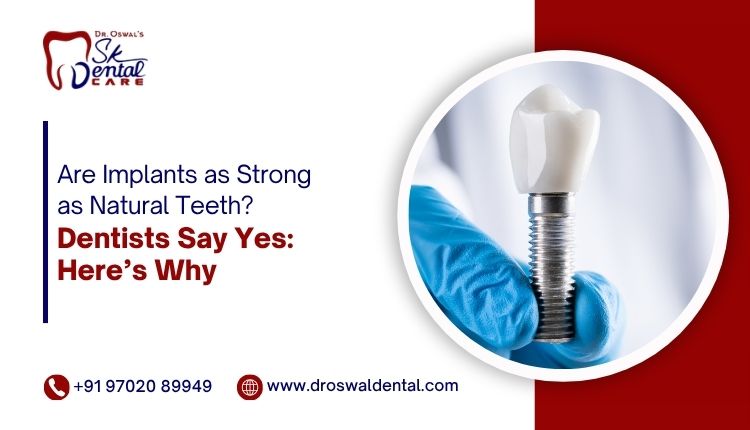
A dental implant replaces the root of a missing tooth. The dentist places a titanium post inside the jawbone. Over time, the bone integrates with the implant surface in a process called osseointegration. This bond creates a stable foundation for the artificial crown placed on top.
Natural teeth rely on roots anchored into bone. Implants replicate this structure. They do not sit loosely on the gum. They integrate with the bone itself.
Think of it like planting a tree sapling in healthy soil. Once the roots spread and anchor firmly, the tree withstands wind and pressure. Similarly, a well-placed implant gains strength through integration with the surrounding bone.
This biological bonding allows implants to handle significant chewing forces. In many cases, they perform as effectively as natural teeth.
Dentists measure implant success based on stability, function, and long-term durability. Clinical research shows high success rates when dentists follow proper protocols and patients maintain good oral hygiene.
Several factors contribute to implant strength:
At Dr. Oswal's S. K. Dental Care, the team uses advanced diagnostics to evaluate bone quality before recommending implants. They focus on safety and predictability rather than rushing treatment.
When bone density remains sufficient, implants can withstand daily chewing pressures, including harder foods like nuts or raw vegetables.
Natural teeth contain living tissue, nerves, and a blood supply. Implants do not. However, implants provide mechanical stability similar to natural roots.
Natural teeth may weaken due to decay, cracks, or gum disease. An implant, once integrated, does not decay. It does require proper care to prevent gum inflammation around it.
Chewing strength depends on several variables:
A well-designed implant crown distributes forces evenly. This balanced distribution prevents overloading.
Imagine standing on a well-built wooden deck supported by strong beams. The deck feels solid because the foundation distributes weight correctly. Implants rely on similar principles of support and alignment.
While implants offer impressive strength, long-term success depends on patient participation.
Key factors include:
Brushing twice daily and flossing around the implant area prevent plaque buildup. Peri-implantitis, a form of gum inflammation around implants, can compromise stability if ignored.
Routine check-ups help dentists monitor bone levels and gum health.
Smoking reduces blood supply and slows healing.
Many patients worry about sensation. Since implants lack nerves, they do not feel temperature directly. However, surrounding tissues still transmit sensory information.
After healing, most patients report that implants feel natural during chewing. The brain adapts quickly to the restored structure.
During the healing phase, mild discomfort may occur. Dentists manage this with medication and aftercare guidance. Once integration completes, the daily function usually feels seamless.
At Dr. Oswal's S. K. Dental Care, a dental implant clinic in Panvel, we encourage patients to share their concerns openly. Honest conversations reduce anxiety and set realistic expectations.
Implants often outperform traditional bridges or dentures in certain situations:
Unlike bridges, implants do not require trimming neighboring healthy teeth. Unlike removable dentures, implants do not shift during speech or eating.
That stability restores not just chewing strength but emotional confidence.
Not every patient qualifies immediately for implants. Dentists assess medical history carefully. Conditions like uncontrolled diabetes or advanced gum disease require management before surgery.
In cases of bone loss, dentists may recommend bone grafting to rebuild support. This preparation increases implant success.
Rushing into treatment without proper evaluation resembles building on uneven ground. A thorough plan ensures predictable outcomes.
Dental implants can match the functional strength of natural teeth when placed correctly and supported by healthy bone. Osseointegration creates a stable bond between the implant and jawbone. Patients can chew most foods comfortably after healing. Proper oral hygiene and routine dental visits help maintain long-term strength. A comprehensive assessment determines suitability.
Implants require consistent brushing, flossing, and professional cleanings. While implants do not decay, the surrounding gums can develop inflammation. Dentists recommend routine check-ups to monitor bone levels. Patients who grind their teeth may need protective appliances. Good maintenance significantly improves longevity.
Dentists perform implant placement under local anesthesia, which keeps patients comfortable during surgery. Mild swelling or soreness may occur afterward. Most patients manage discomfort with prescribed medication and follow aftercare instructions easily. Healing progresses gradually over several months. Clear guidance ensures smooth recovery.
Tooth loss often shakes confidence. Patients hesitate to trust artificial replacements with daily chewing. However, modern implant dentistry offers stability grounded in biology and engineering.
If you consider options, consult experienced professionals at a dental implant clinic in Panvel, like Dr. Oswal's S. K. Dental Care. A detailed evaluation at our clinic can determine whether your bone health and oral condition support implant placement. The right assessment builds the foundation for lasting results.
Implants do more than fill a gap. They restore balance, support, and peace of mind. Strength does not come from appearance alone. It grows from proper planning, healthy bones, and thoughtful care. When these elements align, your smile regains the confidence it deserves.
© Copyright
S K Dental Care
All Rights Reserved. | Powered By 