


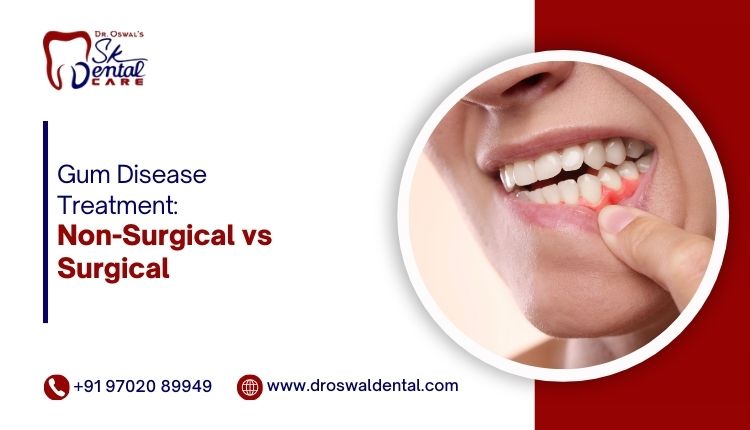
At some point or another, everyone notices a few gum issues. We neglect these issues, thinking they’ll settle on their own, and that is the biggest mistake one can make. You notice a little bleeding while brushing, or your gums feel tender after a long day. You ignore it, assuming a better toothpaste will fix everything. Weeks pass, then months, and the symptoms grow slightly louder. By the time discomfort interrupts meals or sleep, the problem has already settled in deeper than expected.
At Dr. Oswal's S. K. Dental Care, Dr. Shripal Oswal often meets patients who wish they had acted earlier and sought gum disease treatment in Panvel at our facility, not out of fear, but out of uncertainty. Many people do not realize how many treatment paths exist for gum problems or how personalized those paths can be. The decision between non-surgical and surgical care does not follow a common rule for all. It unfolds gradually, guided by symptoms, habits, and long-term oral health goals.
Gum disease does not appear overnight. It develops in stages, beginning with plaque buildup and progressing through inflammation, infection, and tissue damage. Early stages may only cause mild redness or bleeding. Advanced stages can affect bone support, tooth stability, and overall health.
Think of your gums as the soil supporting a tree. When the soil stays healthy, the tree stands firm. When erosion sets in slowly, the tree still stands, but its roots lose strength. Treatment focuses on restoring that foundation before irreversible damage occurs.
Dentists generally divide care into two broad categories:
Each approach plays a specific role at different stages of the condition.
Non-surgical care focuses on stopping disease progression without incisions or invasive procedures. Dentists usually recommend this approach during the early to moderate stages of gum disease.
Common non-surgical options include:
Scaling removes plaque and tartar from above and below the gum line. Root planing smooths the tooth roots so the gums can reattach more effectively. Together, they create an environment where inflammation can settle and healing can begin.
Patients often describe this phase as a reset. Much like reorganizing a cluttered workspace, cleaning away buildup allows everything else to function better. With proper oral hygiene and follow-up visits, many patients experience significant improvement without further intervention.
Dr. Shripal Oswal emphasizes education during this phase. Patients learn brushing techniques, flossing methods, and lifestyle adjustments that support long-term gum health.
Non-surgical treatment works well when gum pockets remain shallow, and bone loss stays minimal. However, advanced gum disease creates deeper pockets where bacteria thrive beyond the reach of standard tools.
Signs that non-surgical care may no longer suffice include:
At this stage, surgical options may offer better outcomes.
Surgical treatment targets areas where infection has progressed beyond surface-level cleaning. Dentists recommend this approach only when necessary and after careful evaluation.
Common surgical procedures include:
Surgical treatment allows dentists to clean infected areas directly and rebuild damaged structures. While the idea of surgery may feel intimidating, modern techniques prioritize comfort, precision, and faster recovery.
Patients often compare this stage to repairing the foundation of a home rather than repainting the walls. It addresses the root of the problem, not just the symptoms.
At Dr. Oswal's S. K. Dental Care, Dr. Shripal Oswal carefully explains every step before recommending surgical care. Transparency helps patients feel confident and prepared rather than anxious.
The choice between treatment types depends on several factors:
Dentists often begin with non-surgical care and reassess progress. If inflammation reduces and pockets shrink, surgery may not be necessary. If the disease persists, surgical treatment becomes a logical next step rather than a sudden escalation.
This step-by-step approach protects both oral health and patient comfort.
Gum disease treatment does not end after a procedure. Long-term success relies on consistency and awareness.
Patients undergoing treatment often adjust habits such as:
Gum health influences overall wellness more than many people realize. Healthy gums support stable teeth, confident smiles, and comfortable eating.
Throughout treatment, dentists monitor progress and adjust care plans. This partnership between patient and provider ensures sustainable results.
Gum disease affects more than physical health. Many patients feel embarrassed by symptoms like bleeding gums or bad breath. Others worry about tooth loss or future dental costs.
Acknowledging these concerns matters. Dental care should feel supportive, not judgmental. At Dr. Oswal's S. K. Dental Care, conversations focus on solutions rather than blame. Patients leave appointments feeling informed and empowered rather than overwhelmed.
If bleeding, swelling, or discomfort concerns you, now is the right time to seek expert guidance. Early evaluation often simplifies treatment and improves results. Schedule a consultation with Dr. Shripal Oswal at Dr. Oswal's S. K. Dental Care to explore your options for gum disease treatment in Panvel and regain confidence in your smile.
Healthy gums support strong teeth, comfortable eating, and peace of mind. The right care begins with a conversation.
1. How much does gum disease treatment in Panvel cost?
The cost of gum treatment depends on the stage of gum disease, pocket depth, and bone health. Dentists usually start with a thorough examination and imaging before suggesting surgical or non-surgical gum treatment. At Dr. Oswal's S. K. Dental Care, you will get a proper quote for treatment before proceeding.
2. Does non-surgical gum treatment hurt?
Dentists use local anesthesia to ensure comfort during deep cleaning procedures. Patients may feel mild sensitivity afterward, but it usually resolves quickly. Proper aftercare helps reduce discomfort and supports healing. Most patients return to their daily routines the same day.
3. How long does recovery take after surgical gum treatment?
Recovery time varies depending on the procedure and individual healing response. Most patients resume normal activities within a few days. Dentists provide clear instructions for oral care, diet, and follow-up visits. Adhering to these guidelines supports smoother recovery.
© Copyright
S K Dental Care
All Rights Reserved. | Powered By 