


You finally decide to chew on that side again. The discomfort has stayed quiet for a few days, so it feels safe. Then, without warning, a sharp pinch shoots through the back of your jaw. You pause mid-bite, wondering if it will pass like it did last time. It doesn’t.
This is usually how the conversation around wisdom tooth removal begins, not with fear, but with hesitation. Most people don’t worry about whether they need treatment. They worry about how it will feel.
At Dr. Oswal's S.K. Dental Care, patients often walk in with one specific concern. They don’t ask about the science first. They ask, “Will it hurt?” And the answer rarely comes in a simple yes or no.
Wisdom tooth pain tends to show up quietly, but they rarely settle quietly. For many adults, these teeth don’t find enough space to grow properly. That’s when issues begin.
Some common reasons patients need tooth extraction include:
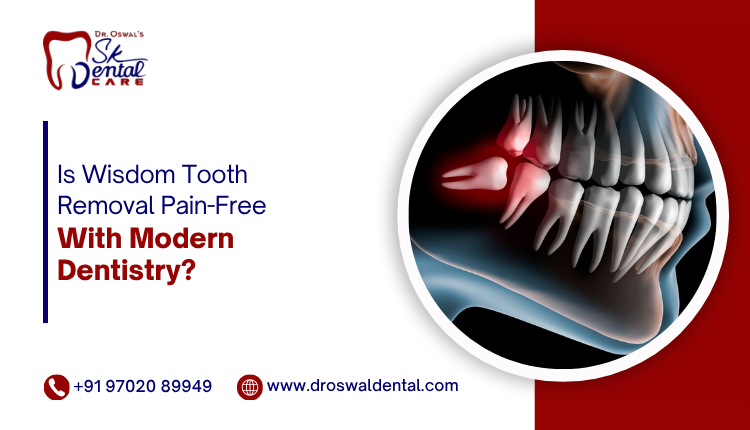
When a tooth gets stuck under the gum or grows sideways, dentists call it an impacted tooth. In such cases, removing impacted tooth becomes necessary to prevent further complications.
Understanding the process often reduces anxiety more than anything else. A typical tooth extraction procedure for wisdom tooth pain involves careful planning and precision.
Here’s what usually happens:
With modern tools and techniques, dentists focus on minimizing discomfort at every step. This is why many patients today describe their tooth extraction as far more comfortable than they expected.
Dentistry has changed significantly over the years. The idea of painful extractions belongs more to memory than reality now.
Today, painless wisdom tooth removal focuses on:
Clinics offering tooth removal now prioritize patient comfort as much as clinical success. At Dr. Oswal's S.K. Dental Care, this approach is reflected in how dentists communicate every step before they begin.
Because sometimes, understanding what’s happening makes the experience feel lighter.
Let’s address the part everyone thinks about but rarely says out loud.
During a painless wisdom tooth removal, you may feel:
After the anesthesia wears off, mild discomfort or swelling may appear. This is part of the healing process, not the procedure itself.
Dentists manage this phase with:
Most patients resume normal activities within a few days, especially when the tooth extraction procedure is planned properly.
Not every wisdom tooth needs removal. But certain signs indicate it’s time to consider removal for wisdom tooth.
Watch for:
In cases where the tooth remains trapped inside the gum, removing impacted tooth helps prevent long-term damage.
Patients often focus on the procedure but overlook where they get it done. Choosing the best clinic for wisdom tooth removal plays a major role in the overall experience.
A good clinic ensures:
The right setup doesn’t just make the tooth extraction procedure smoother. It also builds confidence before the treatment even begins.
When a tooth doesn’t erupt properly, the process changes slightly. Removing impacted tooth requires more precision and planning.
In such cases:
However, even in these situations, painless wisdom tooth removal remains achievable with modern dentistry. The focus stays on minimizing discomfort while ensuring complete removal.
Healing plays an important role in how patients remember the experience. A smooth recovery often makes the entire tooth extraction feel easier.
Most patients notice:
Simple care steps help speed up recovery:
A well-managed tooth extraction procedure often leads to quicker healing and fewer complications.
Here’s where things get interesting.
Modern techniques have made removal for wisdom tooth significantly more comfortable. But “pain-free” often depends on individual perception.
For some, it feels like:
For others, mild soreness after the procedure becomes the most noticeable part.
What matters most is this: today’s painless tooth removal focuses on reducing discomfort at every stage, from diagnosis to recovery.
Is wisdom tooth removal painful with modern dentistry?
Modern wisdom tooth removal focuses on comfort and precision, making the procedure far less painful than people expect. Dentists use anesthesia to ensure a painless tooth removal, so you do not feel sharp wisdom tooth pain during the process. You may notice slight pressure, especially during a tooth extraction procedure, but it remains manageable. After the procedure, mild discomfort or swelling can occur, which is part of natural healing. Clinics offering wisdom tooth extraction with advanced tools ensure better control and faster recovery. In cases that call for removing impacted tooth, dentists take extra care to minimize discomfort. Choosing the best clinic for wisdom tooth removal further improves your experience. Most patients feel more relief than pain once the problematic tooth is removed.
How much will it cost to get my wisdom tooth removed?
The cost of wisdom tooth removal in Panvel typically ranges between ₹1,500 and ₹20,000 per tooth, depending on the complexity of the case. A simple wisdom tooth extraction for a fully erupted tooth may cost ₹1,000 to ₹5,000, while painless tooth removal involving removing impacted tooth can range from ₹5,000 to ₹20,000 or more. The overall cost of the tooth extraction procedure also depends on factors like anesthesia type and diagnostic tests such as X-rays. Choosing the best clinic for wisdom tooth removal ensures better safety, comfort, and long-term outcomes.
How long does surgery for 3 wisdom teeth take?
The time required for wisdom tooth removal depends on the number and condition of the teeth. A single wisdom tooth extraction usually takes 20–30 minutes, while removing three teeth may take around 30–45 minutes. If the case involves removing impacted tooth, the tooth extraction procedure may take slightly longer due to surgical steps. Opting for painless tooth removal with sedation can extend your total clinic time to about 60–90 minutes. Visiting the best clinic for wisdom tooth removal also helps ensure a smoother and more efficient procedure.
Can I eat 5 hours after wisdom tooth removal?
Yes, you can eat after 5 hours of wisdom tooth removal, but you should follow proper aftercare. Avoid eating for the first 2 hours after the tooth extraction procedure to allow proper clot formation. After a painless tooth removal, start with liquids like juice, tea, or soup, and gradually shift to soft foods. If your wisdom tooth extraction involved removing impacted tooth, you should be extra cautious and avoid hot, spicy, or hard foods for at least 24 hours. Choosing the best clinic for wisdom tooth removal also ensures you receive proper post-treatment guidance for faster healing.
Most patients walk into a clinic expecting discomfort and walk out wondering why they waited so long suffering from wisdom tooth pain.
The truth about wisdom tooth removal doesn’t lie in a single sentence. It unfolds through experience, preparation, and the way modern dentistry approaches patient comfort today.
If you’ve been holding back because of uncertainty, it might help to have a conversation rather than an assumption. At Dr. Oswal's S.K. Dental Care, that conversation often becomes the first step toward clarity.
And sometimes, that’s all it takes to move forward, with a little less hesitation and a lot more confidence.
© Copyright
S K Dental Care
All Rights Reserved. | Powered By 