


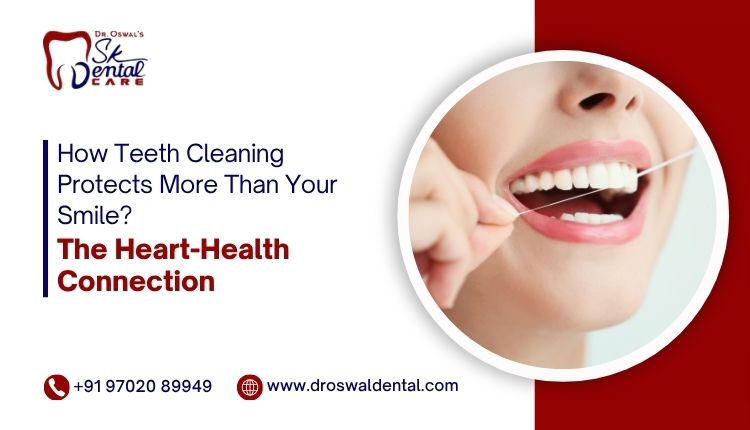
Most people think teeth cleaning is mainly about:
Fair enough.
But did you know that your routine dental cleaning was doing a lot more than just making your smile look better?
Did you know that your gums and your heart are actually more connected than most people realize?
Sounds dramatic, but modern dentistry and health research have been discussing the link between oral bacteria and heart health for years now.
At Dr. Oswal’s S.K. Dental Care in Panvel, Dr. Shripal Oswal often explains that healthy gums are not only important for oral comfort but may also support overall health and reduce long-term inflammation-related risks.
Basically:
Your mouth is not operating separately from the rest of your body.
Your gums are not living independent lives.
Let’s simplify this without making it feel like a biology lecture.
When plaque and bacteria stay on teeth and gums for too long, they may trigger:
This ongoing inflammation inside the mouth may sometimes affect the body beyond just oral symptoms.
That’s where conversations around:
start becoming important.
Poor gum health does not automatically “cause” heart disease directly. But maintaining healthier gums may help reduce the harmful inflammatory burden inside the body.
Which is exactly why regular professional teeth cleaning matters more than people think.
Our proper dental cleaning treatment in Panvel at our clinic focuses on removing:
from areas regular brushing cannot clean properly.
This process may include:
The goal is to reduce bacterial accumulation before it starts causing bigger issues.
And honestly?
Your toothbrush alone cannot always completely remove hardened buildup.
Plaque is basically a sticky bacterial layer that constantly forms on teeth.
If not cleaned regularly, it hardens into tartar.
And once plaque buildup becomes excessive, gums may start reacting with:
This is why many people eventually require:
to restore healthier gum conditions.
A lot of people casually say:
“While brushing, a little blood sometimes comes. It’s normal.”
Not always.
Persistent bleeding gums may sometimes indicate:
Ignoring early gum problems may eventually allow deeper infection and inflammation to develop over time.
That’s why routine preventive dental cleaning becomes extremely important before problems become severe.
Sounds fancy. Very dentist-core terminology, no?
But this treatment basically means professional cleaning focused on maintaining oral hygiene and preventing disease.
It helps reduce:
while supporting healthier gums long-term.
Think of it like maintenance servicing for your mouth.
Your mouth naturally contains bacteria.
Completely normal.
The issue begins when harmful bacteria multiply excessively because of:
This relationship between oral bacteria and heart health becomes important because chronic gum inflammation may contribute to broader inflammatory responses inside the body.
Again:
not scaring.
Just good motivation to stop postponing dental cleanings for 14 months.
Once plaque hardens into tartar, regular brushing usually cannot remove it completely.
This hardened tartar often collects:
Over time, it may increase:
That’s why many patients eventually require:
to restore healthier gum conditions.
Not every cleaning appointment is identical.
A standard professional teeth cleaning usually focuses on removing mild plaque and tartar deposits.
But patients with:
may require deep cleaning procedures.
This type of gum cleaning treatment focuses more thoroughly below the gumline, where bacteria may accumulate silently.
Here’s where things get interesting.
Long-term gum inflammation may contribute to broader systemic inflammation in the body.
This ongoing relationship between:
is one reason healthcare professionals emphasize preventive care more seriously today.
Healthy gums support more than just fresh breath and pretty smiles.
Persistent bad breath is not always “just coffee.”
Sometimes it may indicate:
This is why bad breath removal often improves significantly after proper cleaning appointments.
Because the real problem may actually be bacterial buildup sitting quietly near the gums.
Teeth scaling involves carefully removing hardened deposits from tooth surfaces and around the gums.
This helps reduce:
while improving overall dental hygiene care.
Most modern cleaning techniques are much more comfortable than the scary stories people still imagine from years ago.
Here’s the thing:
Small gum problems are usually easier to manage early.
Ignoring symptoms for years may eventually lead to:
That’s why preventive oral care matters so much.
Regular preventive dental cleaning helps reduce the risk of bigger dental complications later.
Basically:
Small maintenance now may help avoid major treatment later.
People focus heavily on teeth but often forget that gums are the actual support system.
Without healthy gums, even strong teeth may eventually face problems.
Good gum health supports:
This is why dentists pay close attention to:
during routine visits.
Professional cleaning may help reduce the risk of gum disease by removing bacterial buildup before it progresses deeper.
This includes:
combined with good home hygiene.
Consistency matters more than occasional panic-cleaning before weddings.
Not everyone has identical oral conditions.
Some patients naturally develop tartar faster because of:
These patients may require:
especially if plaque buildup becomes recurrent quickly.
Most routine professional oral bacteria and heart health cleaning procedures cause minimal discomfort.
Patients with:
may experience mild temporary soreness during cleaning.
But honestly?
Ignoring gum disease usually becomes much more uncomfortable later.
One of the biggest mistakes people make:
Assuming no visible cavity means oral health is perfect.
Gum disease often develops quietly.
You may still have:
even if teeth “look okay” in selfies.
That’s why regular prophylaxis treatment and hygiene checkups matter.
Modern cleaning appointments are not just cosmetic polishing sessions.
The real goal is to support:
while improving overall oral comfort.
And yes…
The brighter smile afterward is a bonus.
Good oral hygiene is not isolated from overall health and wellness.
The relationship between:
continues to be an important discussion in preventive healthcare.
Which is why regular teeth cleaning is not just “beauty maintenance.”
It’s health maintenance, too.
How often should professional teeth cleaning be done?
Most people benefit from cleaning every six months, although frequency may vary depending on gum health and tartar.
Can teeth cleaning reduce bad breath?
Yes. Removing plaque, tartar, and bacteria often helps improve breath freshness significantly.
Why do gums bleed during brushing?
Bleeding gums may indicate inflammation, plaque accumulation, or early gum disease and should not be ignored.
Is deep cleaning different from regular cleaning?
Yes. Deep cleaning focuses more thoroughly below the gumline when gum disease or deeper bacterial buildup is present.
Can tartar be removed by brushing alone?
No. Hardened tartar usually requires professional dental cleaning instruments for proper removal.
Regular teeth cleaning does far more than improve appearance. It supports healthier gums, reduces bacterial buildup, and plays an important role in maintaining long-term oral wellness.
Through procedures like:
patients can better manage plaque, inflammation, and gum health before bigger complications develop.
At Dr. Oswal’s S.K. Dental Care, Dr. Shripal Oswal focuses on preventive oral care in Panvel and patient education designed to support healthier smiles and healthier habits for the long run.
Remember, it’s not just about pretty smiles, it’s about your entire well-being!
© Copyright
S K Dental Care
All Rights Reserved. | Powered By 