


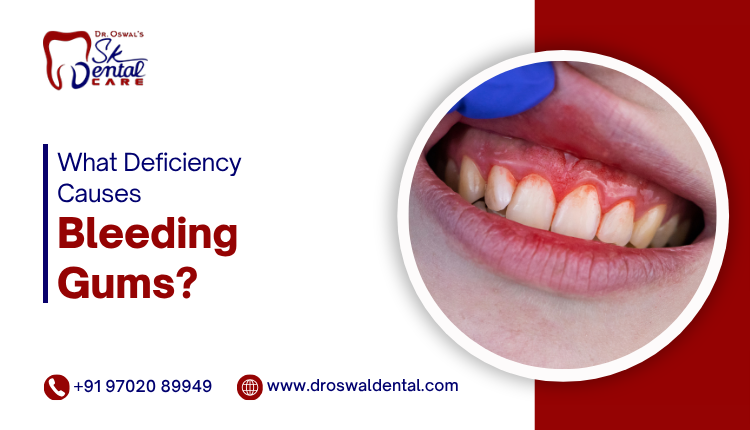
You rinse after brushing and notice pink in the sink. Your gums feel tender, and sometimes they bleed when you eat a crispy dosa or bite into an apple. You wonder if you are brushing too hard or if something more serious is going on. The truth is that bleeding gums are not normal. While poor oral hygiene is a common cause, nutritional deficiencies play a much bigger role than most people realize. Your gums need specific vitamins and minerals to stay healthy, strong, and attached to your teeth. When those nutrients are missing, your gum tissue becomes weak, inflamed, and prone to bleeding.
If you are looking for bleeding gum treatment, understanding the deficiency behind the problem is the first step toward lasting relief. At S. K. Dental Care, we help patients identify the root cause of swollen and bleeding gums and provide a bleeding gums remedy in Panvel that goes beyond surface fixes.
Vitamin C deficiency is the leading nutritional cause of bleeding gums.
If you are experiencing persistent bleeding, your bleeding gum treatment should include a nutritional assessment of your eating habits. A proper treatment plan and practising gum bleeding solutions address both diet and oral hygiene.
Vitamin K is essential for blood clotting and preventing excessive bleeding from your gums.
When gums bleed easily and take longer to stop after flossing or eating, a lack of vitamin K may be contributing. A proper gum health restoration plan includes checking both diet and oral hygiene. Effective gum treatment often combines nutritional advice with professional cleanings.
B vitamins, especially B12 and folate, help control inflammation throughout your body, including your gums.
Inflamed gum care should always consider whether your diet provides enough B vitamins. Eating more curd, paneer, fortified cereals, and whole grains can help. A holistic bleeding gum treatment approach includes these dietary adjustments.
Several other vitamins and minerals play supporting roles in keeping your gums healthy and bleeding-free.
Addressing these deficiencies often reduces bleeding without invasive treatment. Comprehensive treatment for swollen and bleeding gums includes checking these nutrient levels.
Both deficiency and gum disease can cause similar symptoms, but there are clues you can look for at home.
A trained dentist can tell the difference. A targeted bleeding gum treatment plan is then created based on the root cause.
A professional exam helps separate nutritional deficiency from other causes of swollen and bleeding gums.
At S. K. Dental Care, we take a whole body approach to how to stop gums from bleeding. We do not just treat symptoms or provide simple inflamed gum care; we find the root cause. A thorough diagnosis of bleeding gums is essential for lasting results.
Your gut absorbs the nutrients your gums need to stay healthy, and many people face gut issues.
If standard oral bleeding treatment does not work after 2 months, a referral to gastroenterology may be helpful. This integrated approach ensures no underlying issue is missed.
While fixing deficiencies is key, professional care accelerates healing and prevents recurrence.
For sensitive gum relief, we offer gentle cleaning techniques. Most patients need one to two scaling sessions, depending on the extent of tartar accumulation. Professional bleeding gum treatment combined with home care yields the best outcomes.
Long-term success requires a combination of good nutrition and consistent home care.
Gum health restoration is a journey, not a one-time fix. With the right habits, bleeding gums can become a thing of the past. We guide you every step of the way with personalized bleeding gum treatment plans.
Bleeding gum treatment starts with understanding why your gums are bleeding. Vitamin C deficiency is the most common nutritional cause, but low vitamin K, B vitamins, vitamin D, and iron also play significant roles. If your gums bleed despite good brushing and flossing, a dietary gap may be to blame. Simple changes, adding more amla, citrus fruits, leafy greens, curd, and sprouts, can often reverse the problem. When combined with professional cleanings to remove existing tartar accumulation and proper inflamed gum care, you can achieve lasting gum health restoration.
At S. K. Dental Care, we look at your whole health, not just your mouth. If you are tired of seeing pink in the sink, come see us. Let us find the real cause of your symptoms of periodontal bleeding and create a plan for bleeding gum treatment in Panvel that works for your lifestyle.
What vitamin deficiency causes bleeding gums the most?
Vitamin C deficiency is the most common nutritional cause. It weakens collagen in gum tissue, making capillaries fragile and prone to bleeding even with gentle brushing. Severe deficiency leads to scurvy, which causes bleeding or swollen gums and eventual tooth loss.
Can low vitamin D cause bleeding gums?
Yes, low vitamin D increases inflammation throughout your body and is linked to a higher risk of gum disease. It also affects calcium absorption, which can weaken the bone supporting your teeth. Many people have low vitamin D due to limited sun exposure and dark skin.
How long does it take to stop gums from bleeding after fixing a deficiency?
Once you correct a deficiency through diet or supplements, you may notice improvement within two to four weeks. Complete gum health restoration can take one to three months, depending on how severe the deficiency was and whether you also have plaque buildup on gums.
What foods help stop gums from bleeding quickly?
No food works instantly, but amla is exceptionally rich in vitamin C. Fresh lemon juice, oranges, guava, sprouts, curd, green leafy vegetables like spinach and methi, and whole grains all support gum healing over time. For immediate relief, rinse with warm salt water and see your dentist for a professional bleeding gum treatment.
© Copyright
S K Dental Care
All Rights Reserved. | Powered By 