


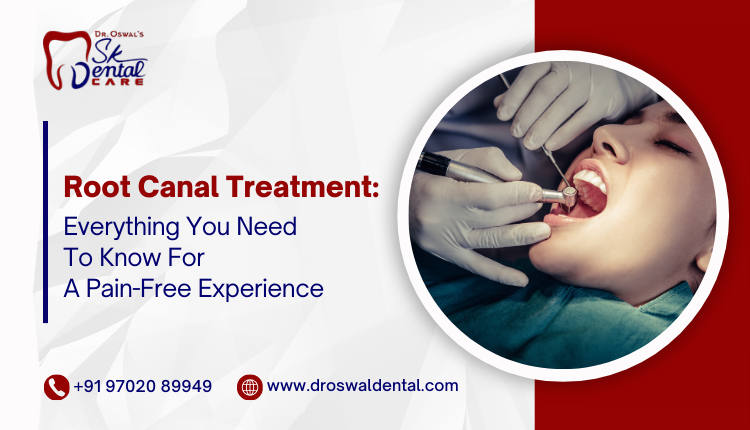
When someone says “I’ve got a root canal treatment coming up,” it often draws the same reaction as saying “I’m getting my appendix removed”: gasps, sympathetic nods, and questions like “Are you okay?” But the reality? Root canal treatment isn’t the villain it’s made out to be.
In fact, thanks to modern techniques and skilled hands like those of Dr. Shripal Oswal at Dr. Oswal’s SK Dental Care Clinic in Panvel, patients now experience a pain-free root canal treatment in Panvel that’s quicker, more precise, and far less scary than you’ve been led to believe.
This blog unpacks what root canal treatment is and why it’s done, what the procedure involves, what recovery looks like, why placing a crown is essential (not just a cosmetic upgrade), and some common FAQs around pain, cost, aftercare, and food habits.
If you live in or around Panvel and are dealing with tooth pain, this guide will give you all the clarity (and confidence) you need before booking your appointment.
What Exactly Is Root Canal Treatment?
Tooth Pain Isn’t Normal — It’s a Sign
The Root Canal Process, Step by Step
Eating After a Root Canal — What’s Safe?
Aftercare: Your Work Isn’t Done Yet
Why Panvel Patients Trust Dr. Shripal Oswal
Frequently Asked Questions (FAQs)
Stop Delaying That Appointment
Book Your Pain-Free Root Canal Treatment in Panvel Today
To understand root canal treatment, let’s zoom in a bit, literally, into your tooth.
Each tooth has a soft centre called the pulp, which contains nerves and blood vessels. When this pulp gets infected due to deep decay, trauma, or cracks, it causes inflammation, intense pain, and sometimes swelling. If left untreated, it can lead to abscesses and even tooth loss.
Root canal treatment is a way to save the natural tooth by:
Removing the infected pulp
Cleaning and shaping the root canals
Sealing the area to prevent reinfection
And finally, protecting the tooth with a permanent crown
It’s not just a pain-reliever; it’s a tooth-saver.
People often ignore toothaches, assuming they’ll go away on their own. But if you’ve got symptoms like:
Sharp, shooting pain while chewing
Persistent sensitivity to hot or cold
Swelling around the gums or cheek
A darkened or discoloured tooth
Or a pimple-like bump on your gums
…it’s likely your tooth pulp is infected, and a root canal treatment may be necessary.
The sooner you act, the easier the procedure, and the quicker your recovery.
At Dr. Oswal’s SK Dental Care Clinic, root canal treatment is done in a precise and efficient manner, often in 1–2 sittings depending on the condition.
Here’s what the procedure looks like:
1. Local Anesthesia
Before anything starts, your dentist numbs the area. So no, you won’t feel a thing. Maybe just some pressure, but zero pain.
2. Accessing the Pulp
A small opening is made on the surface of the tooth to reach the infected pulp inside.
3. Removing Infection
Using fine dental tools, the infected pulp is carefully removed, and the canals inside the tooth roots are cleaned thoroughly.
4. Disinfection and Shaping
The area is disinfected to remove any lingering bacteria, and the canals are shaped for filling.
5. Sealing the Canals
The space is then filled with a rubber-like material called gutta-percha and sealed permanently to block out bacteria.
6. Placing a Crown
And here’s where many people get it wrong, the procedure isn't really complete without a crown. After root canal treatment, your natural tooth becomes hollow and brittle. A crown acts like a protective helmet, restoring function, strength, and aesthetics.
Skipping the crown can lead to cracks or complete tooth fracture, something you definitely don’t want after investing time and money into saving that tooth.
So, can you dig into a pav bhaji or a crunchy bhakri right after?
Not quite.
Here’s a simple guide:
Immediately after treatment: Wait till the anesthesia wears off before eating anything to avoid biting your cheek or tongue.
Next 24–48 hours: Stick to soft foods like mashed potatoes, khichdi, soup, smoothies.
Until crown placement: Avoid chewing on the treated side.
After the crown: Once your crown is placed, you can go back to normal eating habits, but skip opening bottle caps with your teeth, please!
Root canal treatment might end at the clinic, but maintaining that tooth is a shared responsibility.
Here’s what you should do:
Brush twice a day, gently but thoroughly.
Floss to keep the area around the crown clean.
Don’t delay the crown appointment (it’s essential for long-term success)
Visit your dentist for follow-ups every 6 months.
If cared for properly, a tooth with root canal treatment and a crown can last as long as your other teeth, sometimes even a lifetime.
If the thought of root canal treatment still makes you nervous, know this: it’s not just about the tools or the procedure, it’s also about the person performing it.
At Dr. Oswal’s SK Dental Care Clinic in Panvel, Dr. Shripal Oswal is known for:
A calm, reassuring presence
Explaining every step clearly to patients
Ensuring pain-free experiences
Using modern techniques and digital tools for precision
Delivering consistent, high-quality dental care
From working professionals to college students and senior citizens, patients in Panvel trust him for treatments that are efficient, gentle, and effective.
Q1. What is the cost of a root canal treatment in Panvel?
The cost varies depending on the tooth’s location (molars are typically more complex), the extent of infection, and whether any advanced tools or materials are used. Crown placement is also factored into the final cost. Dr. Oswal’s clinic offers transparent pricing and personalized quotes after the initial examination.
Q2. Is it possible to have a painless root canal?
Absolutely. With modern local anesthesia and skilled technique, most patients report no pain during the procedure. Discomfort post-treatment is mild and temporary, usually manageable with simple medication.
Q3. Can you eat after a root canal?
Yes, but only after the numbness wears off. It’s best to eat soft foods for the first couple of days and avoid chewing on the treated side until the crown is placed.
Q4. Can I brush my teeth after a root canal?
Definitely! Brushing and flossing should continue as normal. Just be gentle around the treated tooth initially. Keeping the area clean is vital to prevent reinfection or decay.
Q5. How painful is root canal treatment?
Contrary to the scary stories, root canal treatment is mostly pain-free today. The only pain you’ll likely feel is the one before the treatment, from the infection. The procedure itself is designed to eliminate pain, not cause it.
Tooth pain is not something to push to “next month.” If you need root canal treatment, acting early means:
Less damage to your tooth
Faster healing
Less risk of complications
And ultimately, better peace of mind
With a professional like Dr. Shripal Oswal guiding your care, you’re in safe hands from start to finish, and yes, it really can be a pain-free root canal treatment in Panvel.
Don’t suffer silently or rely on painkillers to “get through it.”
Reach out to Dr. Oswal’s SK Dental Care Clinic in Panvel for expert, pain-free care and full smile restoration, complete with that all-important crown.
Your natural tooth deserves a second chance. Let’s save it the right way.
© Copyright
S K Dental Care
All Rights Reserved. | Powered By 